

Why choose us?
Your Leading Industrial Flooring Rolls Supplier
Enviorment-friendly
Using only natural raw materials to manufacture products that are beneficial to... environment and human body
Excellent Technology
Always insist on using our own proprietary technology in core technology
After-sale service
We have a complete after-sales service system, so you can purchase with confidence
OEM/ODM Service
Made of selected cotton yarn and made of smooth fabric, pure natural raw materials
-
![1.4mm Heavy Duty Safety Flooring]() 1.4mm Heavy Duty Safety FlooringPVC industrial floor is widely used in manufacturing plants, electronics industry, pharmaceutical industry and other fields. It can solve the problem of ground cracking and peeling in a one-stop way.view more
1.4mm Heavy Duty Safety FlooringPVC industrial floor is widely used in manufacturing plants, electronics industry, pharmaceutical industry and other fields. It can solve the problem of ground cracking and peeling in a one-stop way.view more -
![1.8mm Industrial Non Slip Flooring]() 1.8mm Industrial Non Slip FlooringEpoxy membrane is a kind of matrix material based on a variety of elastomer toughening resins and polymer composite systems, and special fiber fabrics are reinforced materials, by professional...view more
1.8mm Industrial Non Slip FlooringEpoxy membrane is a kind of matrix material based on a variety of elastomer toughening resins and polymer composite systems, and special fiber fabrics are reinforced materials, by professional...view more


What is Industrial Flooring Rolls
Industrial flooring rolls refer to large sheets of durable material designed for use in industrial settings. These rolls are typically made from materials such as vinyl, epoxy, polyurethane, or rubber, chosen for their ability to withstand heavy loads, frequent foot traffic, and harsh environmental conditions.
Advantages of Home Vinyl Flooring in Roll
Durability:Epoxy flooring is one of the most durable flooring options, and can last longer than other types of flooring. It's made from a combination of epoxy resin and hardener, which creates a hard surface that can withstand heavy traffic and wear and tear.
Chemical resistance:Epoxy flooring can maintain its appearance and integrity even after prolonged exposure to harsh chemicals. This is especially useful in areas where the floor is frequently cleaned and maintained.
Easy to clean:Epoxy flooring is non-porous and easy to clean, requiring only regular sweeping and occasional mopping. Its smooth surface prevents dirt and grime from accumulating.
Environmentally friendly:Epoxy floor coatings are good for the environment because their manufacturing process is minimal, and the materials used are free from harmful substances.
Cost-effective:Epoxy flooring is a cost-effective flooring solution that offers a visually pleasing finish.
Easy installation:PVC commercial roll is easy to install, and can be put on the ground and walked on.
Types of Industrial Floor Rolls
There are many types of industrial floor rolls, each designed to meet specific needs and challenges in industrial environments. Here are some common types:
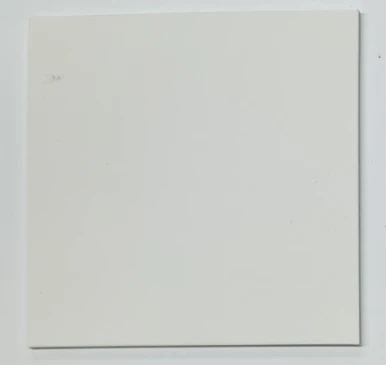
1. Vinyl Floor Rolls
Highly durable, resistant to chemicals and moisture.
Available in a variety of thicknesses for both light and heavy industrial applications.
Easy to clean and maintain.
2. Epoxy Floor Rolls
Extremely durable, resistant to heavy loads and abrasion.
Can be used with anti-slip additives for increased safety.
Resistant to a wide range of chemicals.
3. Polyurethane Floor Rolls
Known for their flexibility and impact resistance.
Excellent resistance to oils, fuels, and chemicals.
Can be installed in thin layers, providing a seamless finish.
4. Rubber Floor Rolls
Provides cushioning, reducing worker fatigue.
Highly resistant to oils, greases, and chemicals.
Has excellent slip resistance.
5. PVC (Polyvinyl Chloride) Floor Rolls
Affordable and easy to install.
Resistant to water and most chemicals.
Available in a variety of textures and colors.
6. Anti-static Floor Rolls
Designed to dissipate static electricity, preventing damage to sensitive electronic equipment.
Usually made of special materials like conductive vinyl or rubber.
7. Textured Floor Roll
Has enhanced slip resistance due to its textured surface.
Available in a variety of patterns and finishes.
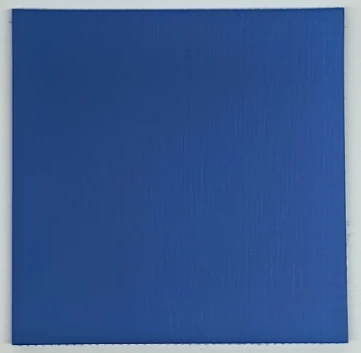
Applications PVC industrial flooring
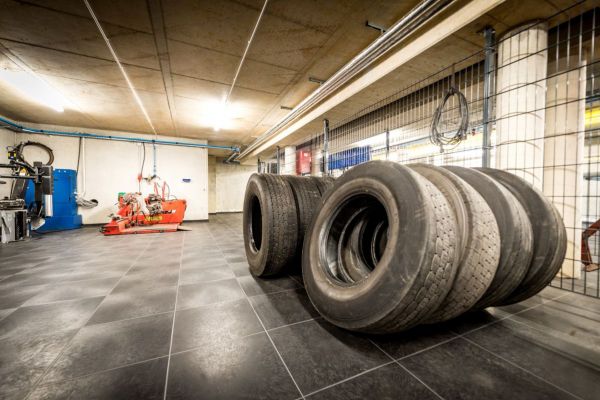
Workshop flooring
- automotive industry
- garage workshops
- motorcycle workshops
- bicycle workshops
- scooter workshops
- tyre services
- exhaust services
- washing stations
- carwashes
- fire stations
- aircraft hangars
- showrooms
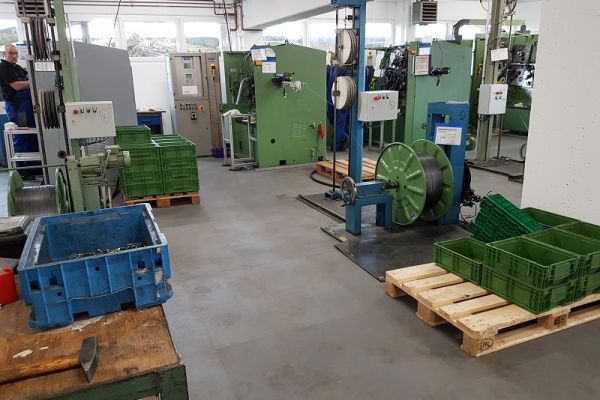
Industrial flooring
- production halls
- industrial buildings
- logistics warehouses
- warehouses
- workshops
- printing businesses
- metal processing companies
- measuring and control rooms
- offices
- changing rooms
- sanitary facilities
- oil storage areas.
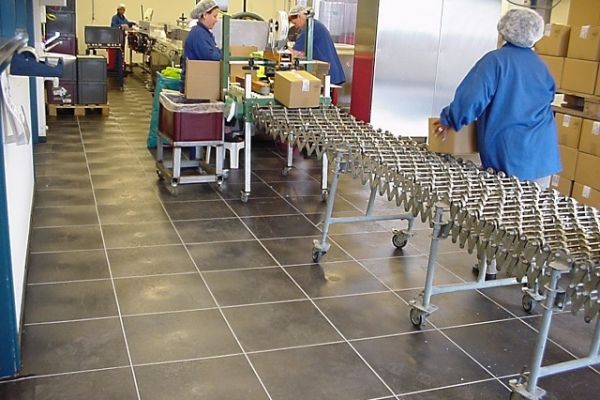
Commercial flooring
- shops
- showrooms
- petrol stations
- warehouses
- industrial buildings
- DIY stores
- supermarkets
- medical practices
- fitness studios
- leisure centres
- toilet blocks
- hairdressers
- tattoo studios
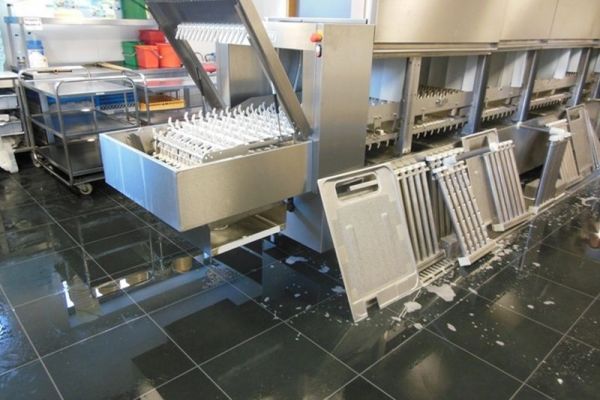
Industrial Kitchen flooring
- Institutional kitchens
- Industrial kitchens
- Hospital kitchens
- Catering kitchens
- Kitchens in educational establishments
- Kitchens in government buildings
- Food processing kitchens
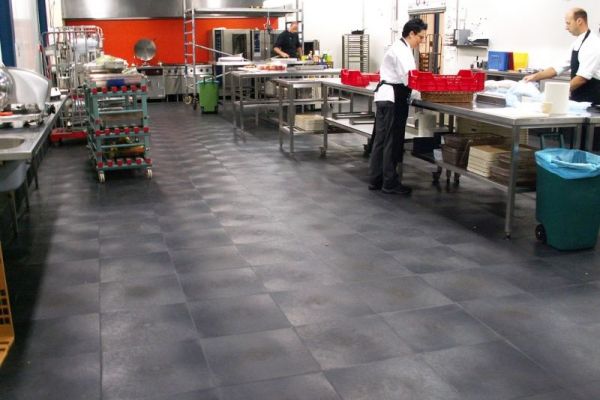
Restaurant-Catering flooring
- Restaurant kitchens
- Snack bars
- Beach pavilions
- Buffets
- Bars
- Cooling
- Catering
- Storage areas
- Beer cellars
- Music centres
- Food trucks
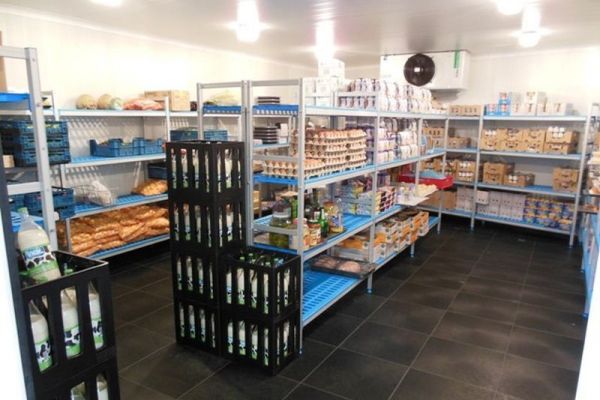
Food industry nonslip flooring
- Bakeries & Bread factories
- Butchers
- Fish processing industry
- Potato, vegetable and fruit industry
- Drinks production
- Breweries
- Wineries
- Honey processing
- Ice cream production
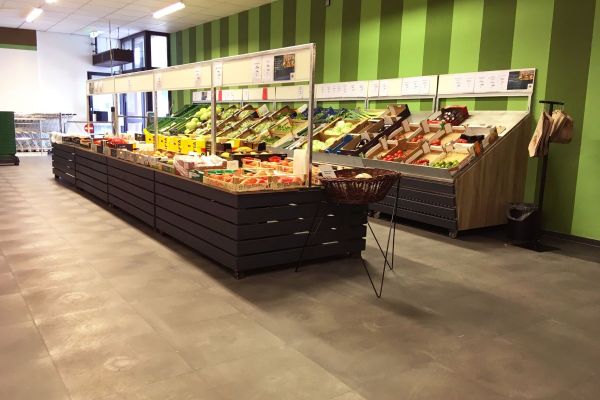
Supermarket flooring
- Supermarkets
- Hardware markets
- Showrooms
- Shop-in-shop stores
- Indoor shopping centres
- Shops
- Restaurants
- Butcher’s or baker’s shops
- Fast food restaurants
- Interior design
- Trade stands
- Offices
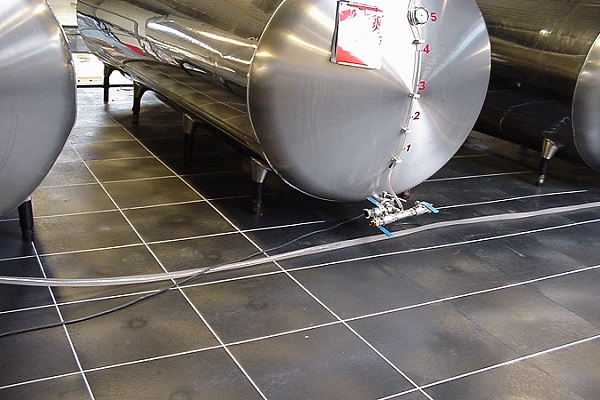
HACCP flooring
- Food industry
- Drinks industry
- Industrial kitchens
- Restaurant kitchens
- Bakeries
- Butchers
- Fish processing industry
- Pharmaceutical industry
- Sanitary areas and toilet blocks
- Fruit and vegetable processing industry.
Components of Industrial Flooring Rolls

Vinyl
Vinyl flooring is made from polyvinyl chloride (PVC) resins, plasticizers, pigments, stabilizers, and a backing sheet. PVC is a thermoplastic resin that's made from ethylene and industrial grade salt. Vinyl flooring can have multiple layers of PVC compounds. The construction and surface treatment of the vinyl determines how easy it is to clean and how resistant it is to stains, scuffs, and scratches.
Rubber
Rubber flooring is made from recycled tire rubber and EPDM flecks. Rubber flooring is slip-resistant, comfortable, sound absorbent, and easy to maintain. However, it can discolor over time and may not be as visually appealing as other options.
Other materials
Other materials used for industrial flooring include limestone, clay, talc, fiberglass, and epoxy.
Key points for maintaining industrial flooring rolls:
Daily Cleaning:
Sweep or vacuum: Regularly remove dust and debris with a broom or vacuum cleaner to prevent scratches from abrasive particles.
Spot clean spills: Immediately wipe up any spills with a damp cloth to avoid staining and damage.
Damp mop: Use a mop with a diluted neutral pH cleaner to wipe down the floor surface.
Periodic Maintenance::
Floor scrubber: For deep cleaning, use a floor scrubber with a cleaning solution specifically designed for your flooring type.
Stripping and waxing: Depending on the flooring material, you may need to periodically strip the old finish and apply a fresh coat of wax to restore shine and protection.
Check for damage: Regularly inspect the floor for signs of wear and tear like cracks, loose seams, or significant scratches and address them promptly.
Important considerations:
Cleaning solution selection:
Always use a cleaning solution recommended by the flooring manufacturer, avoiding harsh chemicals or abrasives that can damage the surface.
Furniture protection:
Use furniture pads on the legs of chairs and tables to prevent scratches from dragging furniture.
Entry mats:
Place entry mats at entrances to trap dirt before it gets tracked onto the floor.

Our factory


Our Certificate

EXHIBITION

FAQS
Q: Why must sheet flooring be rolled?
A: Rolling pushes the flooring down into the adhesive and flattens the adhesive ridges. This assures contact with the adhesive and also assures the adhesive ridges will not show through the finished flooring. Rolling also pushes air out from beneath the flooring between the ridges left by the trowel notches. This assures no trapped air which may cause bubbles in the finished installation.
Q: Why must flooring be conditioned before installation?
A: All materials expand or contract when atmospheric conditions change. In order for the flooring to expand or contract with the subfloor, it must be conditioned to the same atmospheric conditions.
Q: I just finished cutting and finishing the seams of a dark-colored Corlon flooring. The seams appear to be whitened. What is this and how do I fix it?
A: This is called seam whitening and can occur from cutting and deburring the seam. This seam whitening effect can be easily eliminated by using an appropriate shade of paste wax or shoe polish or by gently rubbing the seam with 3 in 1 Oil.
How durable is rolled vinyl flooring?
Vinyl sheet is often compared to linoleum flooring, but it is stronger and longer-lasting. It doesn't scratch or stain easily, which makes it kid and pet-friendly.
Q: What is the best flooring for industrial use?
A: Epoxy and polished concrete tend to be the best combination of effectiveness and value. Whether it's aesthetics, durability, cost or maintenance requirements, each option has its benefits, and placing a personal importance on a few of them will help find which is the perfect flooring material for your industrial space.
Q: How do you clean industrial vinyl flooring?
A: Wipe up any visible spills as soon as they occur. The floor should be mopped daily using plain water. Vacuum and then dry mop the floor to remove surface dirt, loose debris, dust, and hair.
As one of the leading industrial flooring rolls manufacturers and suppliers in China, we warmly welcome you to wholesale discount industrial flooring rolls for sale here from our factory. All our products are with high quality and low price.
safety floor covering, 1 4MM HEAVY DUTY SAFETY FLOORING, HETEROGENEOUS PVC FLOOR EGLISE SERIES