

Company advantage
Advanced production filtration technology
lt adopts the third generation of "Fusion Co-laminating technology" + "multi-layer impurity filtration technology".using 100% new materials, which can effectively remove heavy metals,impurities and other harmful substances,and greatly improve the environmental protectionperformance. And it has developed fo the most advanced third generation, leading 99% of domestic peer enterprises.
Company strength
Bayi has 2 production bases with 180 skilled employees;Bayi can produce 200 TEU per month.
Our certifications
Bayi has been certified by lots of related national and international organizations.
QC
Bayi is growing rapidly, while improving our techniques, using environment-friendly materials and quality control system.Bayi also features personalized designs, convenient installation and easy maintenance.
What is Safety Flooring
Safety flooring is a type of floor covering that is designed to provide safety and protection from slips and trips in high foot traffic areas that are prone to spillages. It's mostly made from vinyl mixed with silicone carbide, quartz and aluminium oxides. These elements make it different and safer from standard flooring.Safety flooring is manufactured and intended for use in commercial/work spaces. The non-slip properties, as well as the durability of it, make it the default choice for medical/hospital environments, schools and educational establishments, as well as retail units and other areas that see a high level of footfall. Safety flooring is also used in industrial areas where heavy items and/or machinery are present because of its stability.
-
![R10 Anti-Slip Emery Flooring For High-Traffic Public Areas]() R10 Anti-Slip Emery Flooring For High-Traffic Public AreasWhen it comes to public transportation, safety is not just a feature—it’s a mandate. Borflor’s BF Series (Quartz Sand Series) has emerged as the industry standard for anti-slip safety bus...view more
R10 Anti-Slip Emery Flooring For High-Traffic Public AreasWhen it comes to public transportation, safety is not just a feature—it’s a mandate. Borflor’s BF Series (Quartz Sand Series) has emerged as the industry standard for anti-slip safety bus...view more -
![Quartz Sand Vinyl Bus Flooring]() Quartz Sand Vinyl Bus FlooringSlip-Proof by Design—Carborundum Quartz Sand PVC Flooring Keeps Every Step Safe.view more
Quartz Sand Vinyl Bus FlooringSlip-Proof by Design—Carborundum Quartz Sand PVC Flooring Keeps Every Step Safe.view more -
![Wear Resistant PVC Train Floor Covering]() Wear Resistant PVC Train Floor CoveringBorflor PVC floor coverings are all wear resistant and all pass the test grade of T grade. The lifespan of our PVC flooring can reach to 10 to 15 years according to different application scenarios.view more
Wear Resistant PVC Train Floor CoveringBorflor PVC floor coverings are all wear resistant and all pass the test grade of T grade. The lifespan of our PVC flooring can reach to 10 to 15 years according to different application scenarios.view more -
![Public Transport PVC Flooring Rolls]() Public Transport PVC Flooring RollsCurrently, public transport primarily use PVC flooring. Buses, in particular, carry large passenger volumes, requiring wear-resistant, practical, and easy-to-install flooring. PVC flooring is...view more
Public Transport PVC Flooring RollsCurrently, public transport primarily use PVC flooring. Buses, in particular, carry large passenger volumes, requiring wear-resistant, practical, and easy-to-install flooring. PVC flooring is...view more -
![Yellow No Standing Area Bus Vinyl Flooring]() Yellow No Standing Area Bus Vinyl FlooringBorflor offer a dedicated floorcraft service helping you to designate certain special needs areas, highlight visual inlays, colourways, or zoningview more
Yellow No Standing Area Bus Vinyl FlooringBorflor offer a dedicated floorcraft service helping you to designate certain special needs areas, highlight visual inlays, colourways, or zoningview more -
![ECE R118 Certificated PVC Bus Flooring]() ECE R118 Certificated PVC Bus FlooringBorlfor is a leading PVC Resilient flooring manufacturer and supplier in China. Our transport safety serie of PVC flooring has been exported to many countries throughout the world. We supply...view more
ECE R118 Certificated PVC Bus FlooringBorlfor is a leading PVC Resilient flooring manufacturer and supplier in China. Our transport safety serie of PVC flooring has been exported to many countries throughout the world. We supply...view more -
![Custom Commercial Train Vinyl Flooring Carpet]() Custom Commercial Train Vinyl Flooring CarpetBorflor is a leading PVC flooring manufacturer and supplier in China. We provide various of colors and patterns for the commercial vinyl train flooring carpet and also we can provide custom...view more
Custom Commercial Train Vinyl Flooring CarpetBorflor is a leading PVC flooring manufacturer and supplier in China. We provide various of colors and patterns for the commercial vinyl train flooring carpet and also we can provide custom...view more -
![Commercial R10 Rate Safety Flooring]() Commercial R10 Rate Safety Flooring- Good anti-slip performance: The surface has been specially treated, and commercial safety flooring can maintain a good anti-slip effect even when it is wet or wet, reducing the risk of people...view more
Commercial R10 Rate Safety Flooring- Good anti-slip performance: The surface has been specially treated, and commercial safety flooring can maintain a good anti-slip effect even when it is wet or wet, reducing the risk of people...view more -
![R10 Slip Resistant Vinyl Safety Floor Covering]() R10 Slip Resistant Vinyl Safety Floor CoveringR10 Slip Resistant Vinyl Safety Floor Covering PVC flooring with anti-slip grade R10 has many advantages, as follows: Safety performance - Excellent anti-slip effect: R10 grade...view more
R10 Slip Resistant Vinyl Safety Floor CoveringR10 Slip Resistant Vinyl Safety Floor Covering PVC flooring with anti-slip grade R10 has many advantages, as follows: Safety performance - Excellent anti-slip effect: R10 grade...view more -
![R10 Anti-slip Train Flooring Mat]() R10 Anti-slip Train Flooring MatR10 Anti-slip Train Floor Mat The following is a detailed introduction to the R10 anti-slip grade PVC flooring for train carriages: Performance characteristics - Excellent anti-slip...view more
R10 Anti-slip Train Flooring MatR10 Anti-slip Train Floor Mat The following is a detailed introduction to the R10 anti-slip grade PVC flooring for train carriages: Performance characteristics - Excellent anti-slip...view more -
![R10 Anti-slip Bus Floor Covering]() R10 Anti-slip Bus Floor CoveringR10 Anti-slip Bus Floor Covering R10 anti-skid grade PVC flooring for buses Performance characteristics - Excellent anti-skid performance: According to the German DIN 51130 standard,...view more
R10 Anti-slip Bus Floor CoveringR10 Anti-slip Bus Floor Covering R10 anti-skid grade PVC flooring for buses Performance characteristics - Excellent anti-skid performance: According to the German DIN 51130 standard,...view more -
![Bathroom PVC Safety Flooring]() Bathroom PVC Safety FlooringBathroom PVC safety flooring is an ideal bathroom floor material with the following characteristics:view more
Bathroom PVC Safety FlooringBathroom PVC safety flooring is an ideal bathroom floor material with the following characteristics:view more


Benefits of Safety Flooring
Slip resistant
It only takes a small spill of water for flooring to become dangerous. But safety flooring has been designed to reduce slipping, making it particularly useful in the likes of bars, clubs, commercial kitchens and public toilets. It works by incorporating aggregates into a wear layer. When these aggregates are enough in number and quality, they can penetrate the wet film to provide contact with shoes.
Hygienic
Unlike standard flooring, safety flooring doesn't absorb any spillages, meaning it can prevent build-up of bacteria, dust and debris. Some Altro products have Easyclean Technology which keeps the flooring looking good and saves time and money when cleaning. This feature makes it perfect for inside health facilities where hygiene is vital.
Durable
Safety flooring is also designed to last and survive the harshest of spillages, such as chemicals. It's hardwearing, with an extremely high impact resistance, so it will survive premises with high foot-traffic too.At Allfloors, we can provide our customers with both Altro and Polysafe safety flooring, as well as Luxury Vinyl Tiles and Carpet Tiles, for a variety of different purposes.
No Curling Corner
The best part of Safety Flooring is you won't find curling corners or lifted tiles. After all, you are installing them to provide you with safety. And if any corner comes out, it can be stuck to your feet and fall you down. But, high-quality, professionally fitted Safety Flooring will remain closed to the floor with no curly corners.
Easy to Clean
Another best part of the Safety Flooring is they do not absorb food or liquid such as water or drink spillage. Therefore, it is super simple and easy to clean them. Because of their easy cleaning, they also dry in no time.
A Wide Range of Options
Safety Flooring comes with a wide range of options to choose from. That means you can choose quality and material for your commercial space, home, and other areas as per your budget and requirements. Thus, you can better ensure the safety of your employees and family members in all possible budgets.
Application of Safety Flooring
Sports facilities
There is a risk of accident throughout sports facilities, like gyms, swimming pools and changing rooms. These are humid environments, meaning that floors will quickly become slippery from sweat, showers or spilled water.
Commercial kitchens
Commercial kitchens are fast-paced environments. It's almost guaranteed that liquids, foods and grease will easily find their way on to the floor. Flooring in commercial kitchens must be able to withstand these spills to ensure kitchen staff are protected.
Healthcare facilities
Doctors' surgeries, dental practices, hospitals and care homes are likely to see chemical spills from medicines. This makes flooring particularly hazardous for those in such facilities who may be unsteady on their feet.
Animal care facilities
Veterinary practices, kennels, and animal rescue shelters are likely dealing with scared animals, some may not even be house trained. Flooring in these places must be able to withstand liquids while being quick and easy to clean in order to maintain a hygienic environment.
Pubs and clubs
The floors of pubs and clubs can quickly become swimming pools, with intoxicated customers spilling entire drinks or accidentally smashing glasses. Staff behind the bar are also at risk too, as they're busy pouring drinks all night in poor lighting.
Types of Safety Flooring

Non Slip Tiles
Looking for safe bathroom flooring? You'll want to consider non slip tiles. Our flooring contractors recommend choosing tiles no larger than 2” by 2” so your bathroom is safe for people with limited mobility. A salesperson can also help you choose tiles with a high slip resistance rating, which is called “coefficient of friction.” Not only are these bathroom floor tiles slip-resistant, but they also are durable enough to withstand years of wheelchair use.
Vinyl Flooring
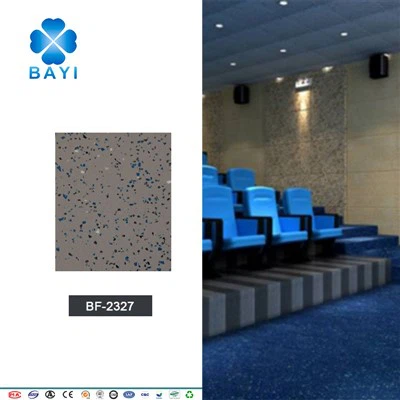
Vinyl flooring is durable enough to withstand years of using a walker or wheelchair. Vinyl flooring also provides a smooth and level surface so you can safely get around your home. If you are on a budget, vinyl can help you mimic the look of more expensive materials. For example, vinyl wood flooring gives you the same aesthetic as natural hardwood. Many of our customers also choose vinyl kitchen flooring for their homes because it is stain resistant, waterproof, and low maintenance.

Hardwood Flooring
Hardwood floors are low maintenance, but will show signs of wear from wheelchair or walker use. For this reason, you'll want to choose a tree species like Hard Maple that ranks high on the Janka hardness test. Other durable tree species include Pine and White Ash. A high Janka hardness rating means that your hardwood flooring will be able to withstand years of using a wheelchair or walker.When choosing wood flooring, be sure to ask the salesperson about using a matt finish. Highly polished wood floors may give your home an air of sleek sophistication, but they are also more slippery for people who have issues with balance.
Low Pile Carpeting
Carpeting helps family rooms and bedrooms feel cozy, especially in the winter. When you visit your local flooring company, have the salesperson show you their inventory of low pile carpet. It will be easier to maneuver a wheelchair or walker on low pile carpet with fibers about a quarter inch long. To maintain carpet flooring, you'll need to vacuum it on a regular basis. If this will be a problem, you may want to consider a more low-maintenance flooring like vinyl.
Slip Resistance
The primary function of safety flooring is to provide slip resistance. The level of slip resistance required will depend on the type of environment. For instance, wet environments such as food processing plants, breweries, and swimming pools will require a higher slip resistance compared to dry environments like factories and warehouses. Look for flooring that has a high coefficient of friction (COF) rating.
Load Capacity
Safety flooring should be able to withstand the weight and pressure of heavy machinery, equipment, and vehicles. Ensure that the flooring you choose has a load capacity that matches the requirements of your facility.
Chemical Resistance
In facilities where chemicals are used, spilled, or stored, the flooring should be able to withstand exposure to these substances. Look for flooring that is resistant to chemicals such as acids, oils, solvents, and alkalis.
Hygiene
In environments where hygiene is critical such as hospitals, laboratories, and food processing plants, the flooring should be easy to clean and maintain. Look for flooring that is non-porous, bacteria-resistant, and can be easily cleaned with detergents and disinfectants.
Durability
Safety flooring should be durable and long-lasting, with the ability to withstand wear and tear over time. Look for flooring that is made of high-quality materials, and has a proven track record of performance in similar environments.
Aesthetics
Safety flooring should not only be functional, but also aesthetically pleasing. Choose flooring that complements the design and style of your facility.
Installation
Installation of safety flooring should be done by qualified professionals. The installation process should be quick and efficient, with minimal disruption to your business operations.
Cost
The cost of safety flooring should be a consideration, but it should not be the only factor. Investing in high-quality safety flooring can help to prevent accidents and injuries, which can save you money in the long run.
How To Install Safety Flooring
The first step is to make certain that the surface intended to be covered is free from dirt, oil, dust, and similar types of debris. If any of these materials are present, the flooring might not adhere properly. It is also wise to measure out slightly more flooring than the dimensions of the room dictate. This can help to account for slight errors; it is much more difficult to paste additional pieces in place if you have underestimated the amount required.
Capping strips are often present around the circumference of the safety flooring, as these will help to prevent the material from lifting up once it has been put in place. Capping strips also prohibit water and other materials from entering into the subsurface. Capping strips should be put in place before the actual flooring process begins.
You will first need to measure the area from the top of the capping strip to the other side of the room (it is wise to use the width of the room as opposed to the length, as the installation process will be physically easier). Try to install this first sheet one width away from the edge of the wall (in other words, begin in the centre of the room).You can then work your way out to either side. Allow approximately 25 millimetres of excess (wastage) when cutting the length of flooring. This will ensure that each strip fights tightly within the confines of the floor. On a final note, it is best to install safety flooring within environments that do not exceed 27ºC.
The Best Ways to Clean a Safety Flooring
If the floor is stained, a wet mop or sponge or cloth to remove it, as wet cleaning will not damage a rubber floor. Mild soap with vinegar in warm water can be used to clean it. If the stain is too deep, a hand brush which is not too sharp can be used to apply extra pressure to wash away the stain. Home-remedies like fabric softeners can also be used. However, steel wool sponges or scouring pads can harm the flooring. At the same time, acetone-based chemicals and those which have turpentine should be avoided as they can scar and harm the flooring.

Initial care: Do not clean it
A safe floor should not be cleaned by employing any method for the first three days after installation. Doing this may damage the adhesive that holds the flooring.
Dirt and debris: Remove with care
One of the toughest things to tackle a rubberised flooring is dirt and small specks of dirt which can become abrasive if ignored for a long time. This should be removed by gentle mopping or sweeping on a regular basis. If the floor is swept and mopped regularly, its lustre and shine will last longer.
Machine cleaning: Go slow
There are many ways to clean flooring and can also be done with the use of machines such as vacuum-cleaners. However, if a machine is being used it should be done with a lower speed as high speed machine cleaning can damage the floor.
Use simple methods
As most of the safe floors are used by kids, urine can be one of the dirt that has to be removed from the flooring. Yet another home-remedy than can be helpful is the application of a large amount of toothpaste. This should be left on the floor for around 20 minutes, and washed with warm water. This can extract the urine and its smell from the flooring.
Our Factory
Bayi Industries Co., Ltd. is a leading supplier and manufacturer of resilient flooring as: Sheet Vinyl Flooring, Safety (Quartz sands or coin)Flooring in rol, SPC (RVP) Viny! Flooring, LVT/LVP Flooring , Peel & Stick Flooring etc."Borflor", as a well-known brand in the flooring industry, has already served many countries eg. UK, Germany, ltaly, USA, Southeast Asia, Middle East, South America, etc.In 1989, the parent Bayi Company was founded, and successfully developed the first "multi-layer composite resilient floor" in mainland China, known as the "pioneer of China's resilient floor".


Certificate

FAQ
As one of the leading safety flooring manufacturers and suppliers in China, we warmly welcome you to wholesale discount safety flooring for sale here from our factory. All our products are with high quality and low price.
wpc decorative wall panel, SAFETY FLOORING BOVEK SERIES