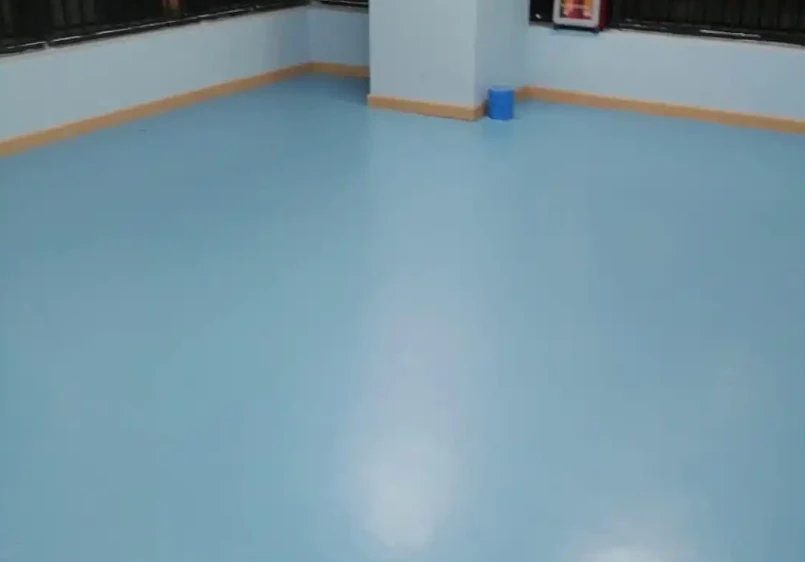

Today we will introduce PVC floor glue, which is a widely used tool in our lives. Especially in hospitals, schools and office buildings, it is widely used. PVC floor glue can be regarded as a tool that can replace flooring. Its superiority can surpass ordinary solid wood floors, and people can feel comfortable when walking on PVC floor glue. This is something that other floors cannot do. So how should PVC floor glue be constructed? Let's take a look at it together.
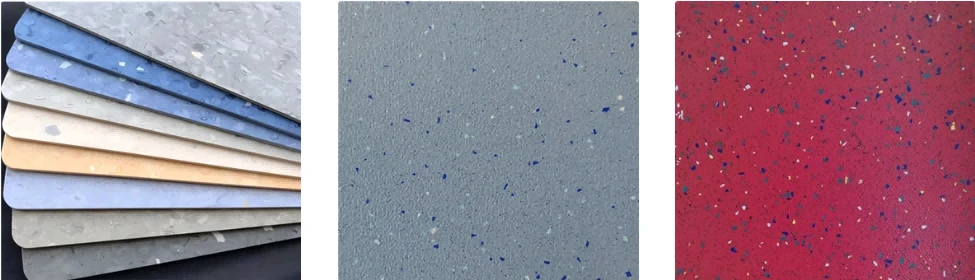
1. Preparation for PVC floor glue installation
1. Technical preparation
(1) Carefully familiarize yourself with and review the floor construction drawings.
(2) Clarify the construction content and analyze the characteristics of the project.
(3) According to the requirements of the factory floor, conduct technical briefings for the operators.
2. Tool preparation
Main tools: electric hot air welding **V-shaped shear knife, serrated scraper, roller, knife, oil brush, strip cutter, scissors, wooden hammer, rubber hammer, plastic bucket, etc.
3. Labor preparation
Since the PVC floor installation project is relatively professional, a fixed professional team is used for construction and installation. The team members have many years of floor construction experience to ensure 90% of the construction quality.
4. Material preparation
(1) The floor material of the project is PVC coil: the board surface is required to be flat and smooth, without cracks, uniform color, consistent thickness, and meet the design requirements and relevant technical standards.
(2) The surface of the welding rod should be flat and smooth, without holes, no nodules, wrinkles, uniform color, and the composition and performance of the welding rod should be the same as the floor material.
(3) The adhesive is required to be quick-drying, high in adhesion strength, strong in water resistance, environmentally friendly and non-toxic water-based adhesive and meet the relevant technical standards.
(4) Material transportation and inventory must be stored upright, not flat, overlapping, to avoid deformation of PVC coils, and not stored in humid places or exposed to sunlight to avoid discoloration and uneven color of the board surface. Adhesives should be stored separately, fireproof, and protected from sunlight.
2. Working conditions
1. The ceiling, walls, water, electricity and pipelines have been installed.
2. Indoor painting and slurry brushing have been completed.
3. The base layer has been completed, without hollows, cracks, sand, oil stains, etc.
4. The indoor temperature is not more than 80%, and the construction environment temperature should not be lower than 10℃.
3. PVC operation process
Base treatment-self-leveling construction pre-laying-PVC installation-joint welding-cleaning site.
(I) Base treatment
1. After the installation of walls, ceilings, doors and windows, etc., clean the ground debris.
2. Remove sand, oil stains, and leftovers on the surface of the base layer.
3. Clean the dust and sand on the ground.
4. After the ground is thoroughly cleaned, roll the interface agent evenly.
(II) Self-leveling construction
1. Check whether the cement self-leveling meets the relevant technical standards. If the self-leveling is expired, it shall not be used.
2. Pour an appropriate amount of self-leveling into the solvent and dilute it with clean water according to the product instructions.
3. Stir thoroughly until the cement self-leveling becomes a fluid substance.
4. Pour the self-leveling on the construction ground in sequence and scrape it flat with a rake scraper. The thickness is about 2-3mm.
5. No pedestrians or objects are allowed to be stacked within 4 hours after the self-leveling construction.
(III) Laying out the lines
1. Divide the grid and mark the lines according to the design pattern, the specifications of the rubber floor, and the size of the room.
2. Pop up the center cross line or diagonal line on the base layer, and pop up the parquet dividing line.
3. Pop up the edging line on the wall. The lines must be clear and accurate.
4. Before laying the floor, arrange it according to the lines, pre-assemble it and number the boards.
(IV) Installation method of PVC floor glue
1. First wipe the ground base with a wool brush or dry towel to remove dust.
2. Apply the adhesive evenly on the base surface with a toothed scraper, lay the plates from the inside to the outside in sequence, and pressurize and compact one room or one construction surface with a roller or push plate.
3. After the plates are laid, judge the dryness of the adhesive according to the temperature, and then weld the plate seams.
4. Before welding, cut the edges of the two adjacent pieces into V-shaped grooves, use welding rods with the same composition as the welded plates, and adjust the hot air welding temperature to 180 degrees; -250 degrees; for welding.
5. After the welding rod cools, use a spatula to shovel the excess welding rod above the plate surface flat. Be careful not to scratch the floor surface during operation.
The above is about the construction process and specific installation methods of PVC floor glue. PVC floor glue is widely used in our lives. It is safer for the human body and it is also very environmentally friendly. This is one of the important reasons why it is widely used. It is worth noting that the first thing we must do when installing is to clean up the dust on the ground base, otherwise it will be difficult to install. Everyone must remember it.