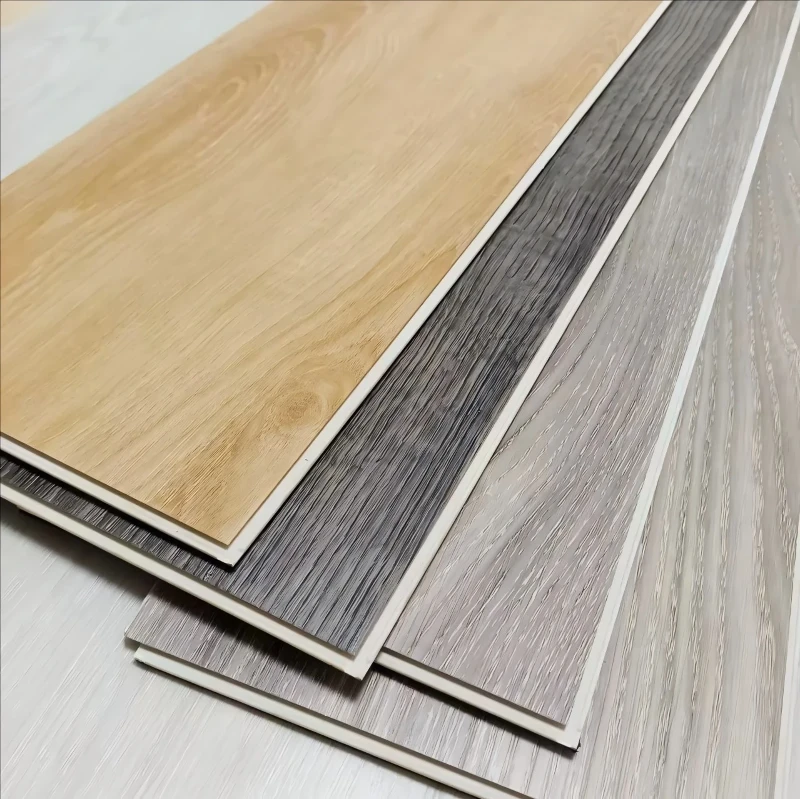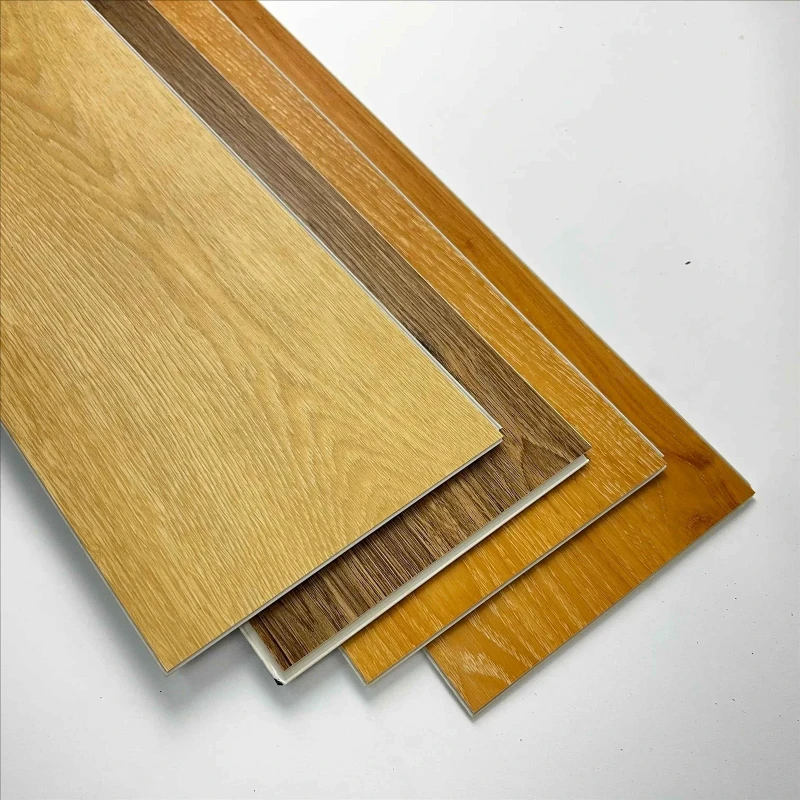

Steps of Installing SPC flooring
The steps for installing SPC flooring are as follows:
Preparation before installation
- Ground treatment: Make sure the ground is flat, dry and clean. Uneven ground will cause hollowing, warping and other problems after the floor is installed. If the ground is uneven, cement mortar or self-leveling material is needed for leveling. At the same time, the ground should be kept dry and the moisture content should be less than 2% to prevent the floor from being deformed by moisture.
- Material and tool preparation: Prepare SPC flooring, special floor glue, skirting, closing strip, and installation tools such as tape measure, pencil, utility knife, rubber hammer, cutting machine, etc.
Installation steps
1. Measurement and planning: Accurately measure the length and width of the room, plan the laying direction and starting position according to the size of the floor, and minimize cutting to save materials and ensure beauty.
2. Laying moisture-proof membrane: Lay moisture-proof membrane on the cleaned ground. There should be a certain overlap between adjacent moisture-proof membranes (about 20-30 cm), and seal them with tape to prevent moisture penetration.
3. Install the first row of floor: Install the first row of floor starting from one corner of the room. Place the tongue and groove (lock) of the first floorboard toward the corner, and ensure that there is an appropriate expansion space (generally 8-12 mm) between the floorboard and the corner. You can use a gasket to maintain this distance.
4. Joining floorings: Align the lock of the second floorboard with the tongue of the first floorboard, then gently press down and push inward until the locks of the two floors are fully locked. During the installation process, you can use a rubber hammer to gently tap the floorboards to make the splicing tighter. Install subsequent floors in the same way.
5. Cutting floors: When you encounter corners, pipes or other obstacles and need to cut the floorboards, use a tape measure and pencil to accurately measure the size, and then cut it with a utility knife or cutter. The edges of the cut floorboards should be flat to ensure good splicing with the surrounding floors.
6. Installing end strips and skirtings: Install end strips at the edges of the room, doorways, and junctions of different materials to cover the edges of the floorboards and make the transition natural. After installing the floorboards, install skirtings along the wall roots, which can not only cover the gap between the floorboards and the wall, but also serve as a decoration. The skirting can be fixed with nails or glue.
Post-installation inspection
After installation, check whether the floor is tightly spliced, whether the surface is flat, and whether there are obvious gaps or height differences. If there are any problems, they should be adjusted and repaired in time. At the same time, clean up the debris and dust on the floor surface.